

Tales from our Travels - Alicante

An early flight into Miguel Hernandez Airport, bleary and weary from our peregrination, and the bright lights and whistles and bells of the newly installed border gates (they might not be that new, we just haven't flown anywhere for quite some time), as we traipsed through a predominantly empty terminal building, the striking headline from a large poster caught our eye; ‘Welcome to Alicante: Home to the World’s Oldest Wine Region’.
Now hang on a minute…
This got us scratching our heads. According to the textbooks we’ve read, briefly summarising, the origins of wine are widely thought to be from Georgia several millennia ago. Then the Phoenicians, Greeks and the other usual suspects from Antiquity got hold of it, bringing wine through the Mediterranean before vitis vinifera was championed by the Romans and distributed to the empire and beyond. Medieval Anglo-French trade points to Gascony and Bordeaux as being the first recognised wine regions of note, at least to British understanding, but the Italians might have a different viewpoint on that. The Lucentum locals are resolute - we started it!
In 1510, to be exact, the first actual legislation to outline a wine region, in this case the city of Alicante, was passed by Ferdinand, King of Aragon. This act was, essentially, a primitive precursor to an appellation or a PDO (Protected Designation of Origin) - an edict to guarantee the quality of the product from which it originates. Such was the high standard of the local vino, Ferdinand would not accept any imitations, limiting the amount of wine going out and coming into the city. The snappily titled “Junta d’Inhibició del Vi Foraster d’Alacant”, or JIVFA for short, evolved over the centuries to be replaced by current legislation under the Alicante PDO.
Alicante has a rich winemaking history, with the fabled 'Fondillón' predating Europe’s other better known fortified wines. Made with the region’s most famous grape variety, Monastrell, the wine is aged for 10 years without fortification or intervention in oak barrels before release. It is a dessert wine of great richness and complexity - no wonder Ferdinand was so keen to keep hold of it.
Although we couldn’t persuade any of the friendly local waiters or bartenders to open a bottle for us to taste, we managed to try several other local wines, most of which were really impressive, and most of which, sadly, you can’t buy easily over here. Happily, though, there is one we are more than glad to recommend…
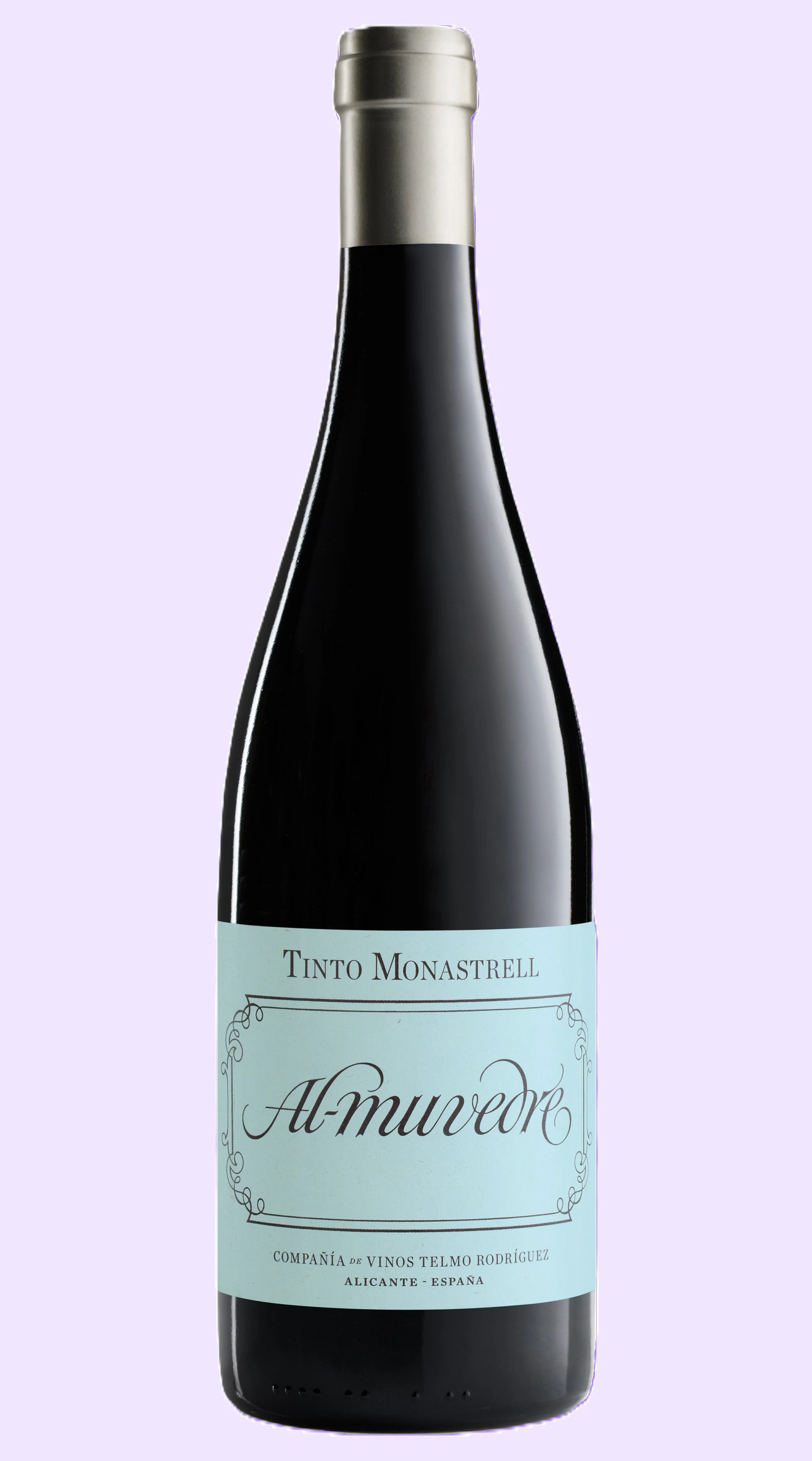
Al-Muvedre Monastrell’s name hints at what most of us know the grape as best - Mourvedre. Although established as a staple variety in France, Australia (where it's known as Mataro) and beyond, Mourvedre traces its roots back to the ancient winemaking region of Alicante where it thrives in the warm climes and mountainous elevations. Al-Muvedre is the work of visionary winemaker Telmo Rodriguez, and he has brought his genius to bear in the production of this fabulous red.
This is classic Mediterranean Monastrell - vibrant black fruit, spice and earthiness. Blackberry and tea greet the nose, while the palate exhibits juicy autumn fruits, bright acidity, soft tannins and a smooth, lengthy finish.
